Fidelity Total Bond ETF (FBND)
$45.10
Quotes are delayed by 15 minutes.
1D
1W
1M
3M
6M
YTD
1Y
2Y
5Y
ALL
Key data on FBND
AUM
$27.19B
P/E ratio
16.5
Dividend yield
5.1608%
Expense ratio
0.36%
Beta
0.272031
Price on FBND
Previous close
$44.90
Today's open
$45.07
Day's range
$45 - $45.11
52 week range
$44.65 - $46.86
Popular funds like FBND
FBND industries and sectors
Bonds
Domestic
News on FBND
What Advisors Should Weigh Before Buying Active ETFs
For advisors, active ETFs raise a simple question: Pay up for a manager who's beating the market, or stick with the index and pocket the savings? In the $15.7 trillion U.S. ETF market, the answer splits investors into two very different camps.

ETF Trends • 20 hours ago
FINA-lly: A New ESG ETF Joins Fidelity ETF Leaderboard
Fidelity has put together a strong 12-month stretch of asset gathering. An impressive $35 billion recently flowed into the Fidelity ETF lineup.
ETF Trends • Jul 17, 2026

The Fidelity Bond ETF Quietly Outperforming Vanguard's BND Over The Last Decade
The Vanguard Total Bond Market ETF (BND) is the largest bond ETF in the U.S.

24/7 Wall Street • Jul 14, 2026

The Q2 Flowdown: ETFs Smash Records to Start Summer
Markets may have ended the first quarter with a thud, but stocks put another record run in the books to close out the first half of 2026. The U.S. ETF market had already shattered records, crossing the $15 trillion threshold and cruising past $1 trillion in net inflows right before summer officially began.
ETF Trends • Jun 30, 2026

Unlocking Active Alpha in Fixed Income with Fidelity
The fixed income environment continues to project uncertainty, as higher-for-longer interest rates persist amid sticky inflation. With that, investors may want to lean on the expertise of active managers when deciding between an active and indexed fund.
ETF Trends • Jun 17, 2026

If You Hold This Bond ETF, You're Making an Expensive Mistake
The Fidelity Total Bond ETF (NYSEARCA:FBND | FBND Price Prediction) sells itself as a one-ticket solution for the bond sleeve of your portfolio.
24/7 Wall Street • Jun 3, 2026
3 ETFs to Diversify Your Portfolio in 2026
These options are solid starting points. Morningstar's Guide to Portfolio Diversification.

Morningstar • May 28, 2026

Fidelity's Thorpe Talks Yield, 2026 Outlook
It's no secret that the fixed income landscape has come back to life after years of relative quiet. Where investors once had to really look for sources of income or yield, the live rate market has brought plenty of opportunities to fixed income.
ETF Trends • May 27, 2026

100 Mutual Fund Conversions Are Coming: Why BOND and FBND Could See Massive Inflows This Year
The active bond ETF wrapper is about to absorb a structural shift. the PIMCO Active Bond ETF (NYSEARCA:BOND | BOND Price Prediction) sits near $92 after a 6% total return over the past year, while Fidelity's Fidelity Total Bond ETF (NYSEARCA:FBND) and BlackRock's iShares High Yield Muni Active ETF (BATS:HIMU) round out a trio positioned to catch fund flows from the roughly 100 mutual fund-to-ETF conversions State Street expects in 2026.
24/7 Wall Street • May 6, 2026

Beyond the Agg: Dispersion a 2026 Theme in Bond ETFs
In a recent Market Outlook Symposium we hosted at VettaFi, we learned that 2026 has marked the return of fixed income as a strong contributor to an investor's total return. We also learned that the biggest theme in fixed income investing this year is dispersion.
ETF Trends • May 6, 2026

¹ Disclosures
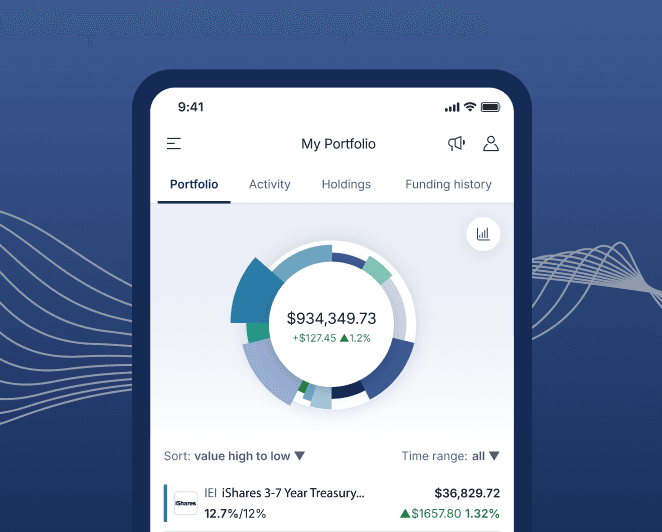
Invest in Fidelity Total Bond ETF
Open an M1 investment account to buy and sell Fidelity Total Bond ETF commission-free¹. Build wealth for the long term using automated trading and transfers.