iShares S&P Mid-Cap 400 Value ETF (IJJ)
$143.07
Quotes are delayed by 15 minutes.
1D
1W
1M
3M
6M
YTD
1Y
2Y
5Y
ALL
Key data on IJJ
AUM
$8.58B
P/E ratio
16.2
Dividend yield
1.7074%
Expense ratio
0.18%
Beta
0.969784
Price on IJJ
Previous close
$142.81
Today's open
$143.57
Day's range
$142.54 - $143.69
52 week range
$123.89 - $151.81
Popular funds like IJJ
IJJ industries and sectors
Equities
Domestic
Mid-Cap
Top holdings in IJJ
1.29%
SNX
Synnex Corp
1.28%
DINO
Hollyfrontier
1.2%
OVV
Ovintiv Inc.
1.12%
1.04%
1.04%
SN:KY
Sharkninja Inc
0.94%
0.91%
News on IJJ
IJJ: Mid-Cap Value Makes Sense, But Peers Look Better
The iShares S&P Mid-Cap 400 Value ETF is the oldest ETF in the Mid-Cap Value category; it may be used as a diversifier alongside a large-cap tech-heavy portfolio. However, several key competitors show better total and risk-adjusted returns for 10 years, some of them with lower fees and higher liquidity. For mid-cap value exposure, VOE wins on Sharpe ratio, expenses, and liquidity, while RFV is the best performer.

Seeking Alpha • 14 hours ago

Should iShares S&P Mid-Cap 400 Value ETF (IJJ) Be on Your Investing Radar?
If you're interested in broad exposure to the Mid Cap Value segment of the US equity market, look no further than the iShares S&P Mid-Cap 400 Value ETF (IJJ), a passively managed exchange traded fund launched on July 24, 2000.

Zacks Investment Research • Sep 23, 2026

Better Value ETF: Vanguard's Small Cap-Focused VBR vs. the iShares IJJ Targeting Mid-Cap Stocks
The Vanguard Morningstar Small-Cap Value ETF offers a significantly lower expense ratio of 0.05% compared to 0.18% for the iShares S&P Mid-Cap 400 Value ETF. The Vanguard Morningstar Small-Cap Value ETF manages over $67.8 billion in assets and provides broader diversification with 841 holdings.

The Motley Fool • Aug 16, 2026

Small Caps Challenge Momentum Factor's Throne
The momentum risk factor has been leading the field in recent history, but there are signs that a rotation may be underway, based on a set of ETFs through yesterday's close (July 20). After a long run of relatively weak small-cap results, the recent strength for these shares raises the possibility that a leadership rotation may be developing.
Seeking Alpha • Jul 21, 2026

IJJ vs. SLYV: Which Value ETF Is the Better Buy Today?
IJJ has delivered a higher five-year total return with less volatility than SLYV. SLYV carries a lower expense ratio and offers a higher dividend yield than IJJ.
The Motley Fool • Jul 12, 2026

ISCV vs. IJJ: Which Value ETF Is the Better Buy Today?
The iShares Morningstar Small-Cap Value ETF (ISCV) carries a lower expense ratio than the iShares S&P Mid-Cap 400 Value ETF (IJJ). IJJ has experienced a modestly lower maximum drawdown over the last five years.
The Motley Fool • Jul 11, 2026

Which iShares Value ETF Is Better, the Small Cap-Focused IWN or IJJ Targeting Mid-Cap Stocks?
The iShares Russell 2000 Value ETF focuses on small-cap value stocks while the iShares S&P Mid-Cap 400 Value ETF targets the mid-cap space. The iShares S&P Mid-Cap 400 Value ETF carries a lower expense ratio of 0.18% and has delivered higher five-year total returns.
The Motley Fool • Jul 4, 2026

Will Micro Caps Steal The Momentum Factor's Performance Crown?
Momentum continues to stand out as the dominant equity risk factor since the war with Iran began on Feb. 28. The iShares MSCI USA Momentum Factor ETF has soared more than 32% since the initial attacks on Iran—an extraordinary gain compared with the rest of the field.
Seeking Alpha • Jun 30, 2026

Vanguard VBR vs. iShares IJJ: Is a Small-Cap or Mid-Cap ETF the Better Buy for Investors?
VBR offers a significantly lower expense ratio of 0.05% compared to the 0.18% fee for IJJ. While both funds target value stocks, VBR focuses on smaller companies, while IJJ targets the mid-cap space.
The Motley Fool • Jun 22, 2026

Should You Buy a Small Cap or Mid Cap ETF? We Take a Look at Two iShares ETFs
iShares Morningstar Small-Cap Value ETF has a significantly lower expense ratio than iShares S&P Mid-Cap 400 Value ETF iShares S&P Mid-Cap 400 Value ETF offers lower volatility and a shallower maximum drawdown over the last five years iShares Morningstar Small-Cap Value ETF holds over 1,000 positions, providing much broader diversification than its mid-cap counterpart
The Motley Fool • Jun 11, 2026

¹ Disclosures
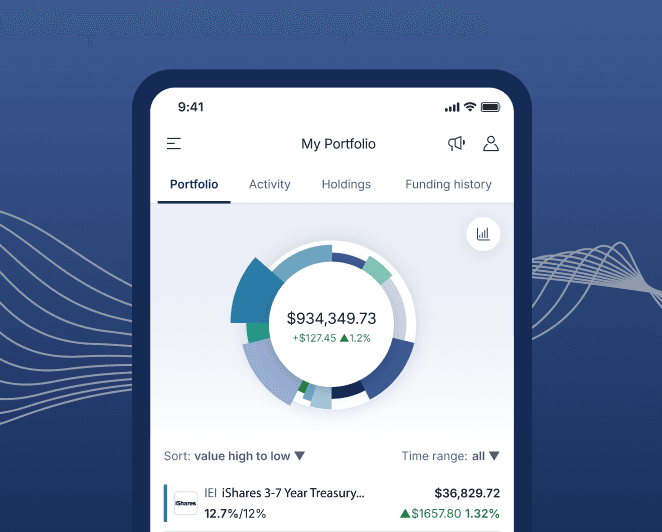
Invest in iShares S&P Mid-Cap 400 Value ETF
Open an M1 investment account to buy and sell iShares S&P Mid-Cap 400 Value ETF commission-free¹. Build wealth for the long term using automated trading and transfers.